A tankless water heater keeps no reserve of hot water. It waits for a faucet to open, senses the flow, fires a burner or energizes its elements, and heats water as it races through a compact heat exchanger. That on-demand design is efficient and space-saving, but it packs a lot of sensors and controls into one small cabinet, and every one of them has to agree before you get hot water. When one of them objects, the unit shuts down and posts an error code. In Palo Alto, CA, the usual culprits are mineral scale coating the heat exchanger, a flow sensor that no longer registers demand, an igniter or flame rod that cannot prove the flame, and venting or gas supply problems that trip the unit's safety limits.
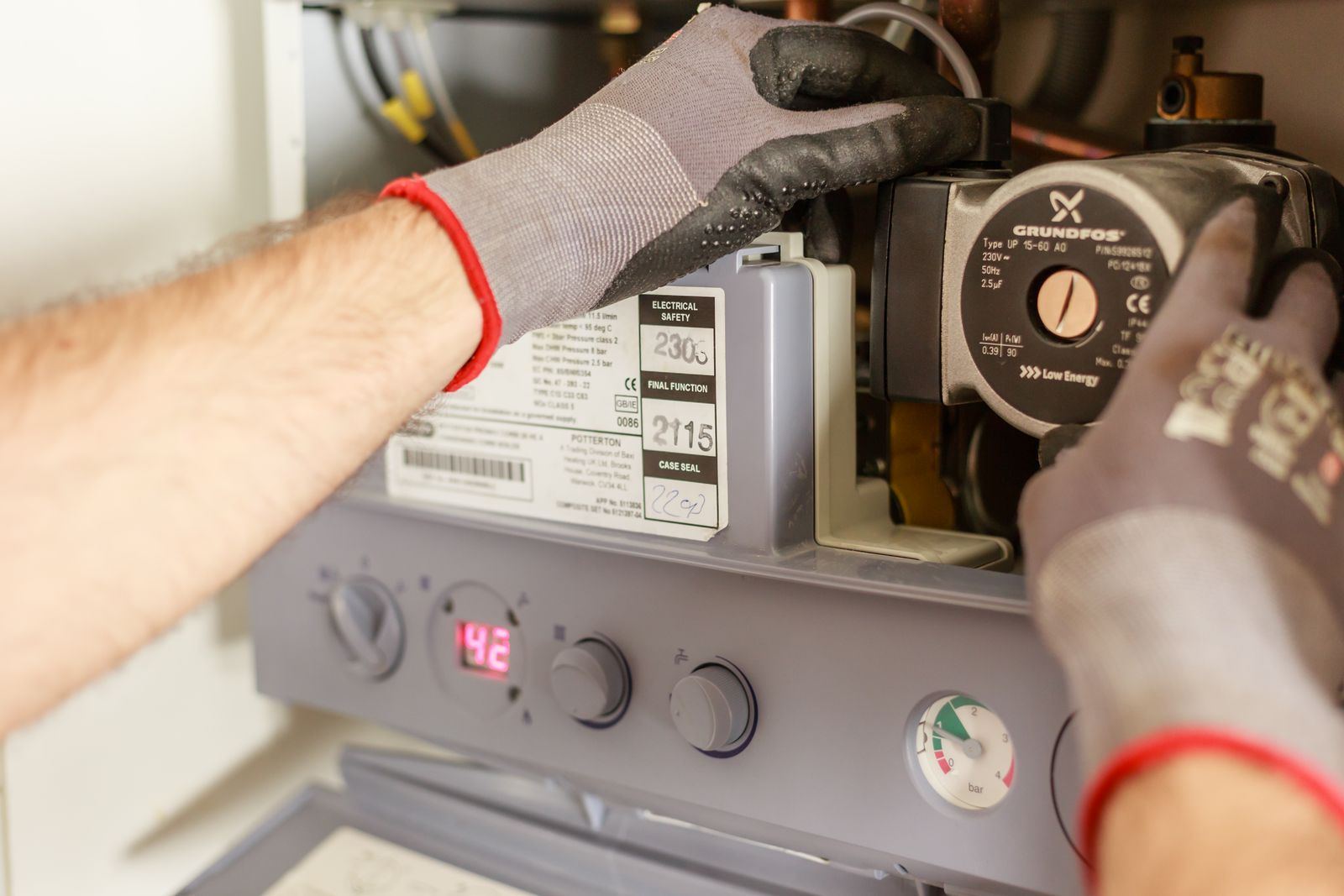
Palo Alto Water Heater starts every tankless repair by reading the unit, not guessing at it. On every service call in Palo Alto, we pull the active error code and the stored fault history, then test the components that code points to: flow sensor output while a faucet runs, flame rod signal in microamps, igniter resistance, inlet gas pressure both static and at full fire, and vent condition from the unit to the termination. Scale gets checked by comparing inlet and outlet temperatures against flow rate, since a heat exchanger that cannot transfer heat shows up clearly in those numbers. A code tells us where to look, not what to replace. An ignition code, for example, can come from a worn igniter, a dirty flame rod, low gas pressure, or a blocked intake, and each one calls for a different fix.
We work on tankless heaters from Rinnai, Navien, Noritz, Rheem, Takagi, and the other major brands, gas-fired and electric alike. The fix depends on the diagnosis: a full descaling flush through the isolation valves when scale is choking the heat exchanger, a new flow sensor when the unit no longer notices a faucet opening, a fresh igniter or cleaned flame rod when ignition keeps failing, or a vent correction when the unit trips on combustion air. Sometimes the answer is bigger. A gas line undersized for the unit's full firing rate has to be upsized, and a heat exchanger cracked by years of scale may make replacement the smarter call on an older unit. We lay out every option honestly before any money is spent. Call (650) 220-1790 to schedule tankless repair.
Most of our service calls are for Water Heater Repair in Palo Alto. Start there if you're not sure what you need.
Signs You Need Tankless Water Heater Repair in Palo Alto
Recognizing the warning signs early can save you money and keep a slow drip from turning into a flooded utility room. If any of the following sound familiar, it's worth having the unit checked:
- The unit clicking or trying to light several times before giving up
- Lukewarm water whenever two fixtures run at the same time
- The display showing an error code instead of a temperature
- A heater that only fires when water runs at full blast
- Hot water that fluctuates even though nobody touched the faucet
- A combustion fan that sounds louder or rougher than normal
- Water dripping from the cabinet or the condensate line
- Longer bursts of cold water between hot draws than you used to get
Act Before It Gets Worse
A worn-out anode rod, a sediment-choked tank, or a weak thermocouple rarely fixes itself, and the repair usually costs more the longer it waits. Call Palo Alto Water Heater at (650) 220-1790 at the first sign of trouble.
No Hot Water? We Can Help.
We'll diagnose the problem and give you a straight answer on the fix.
Call (650) 220-1790 NowYour Tankless Water Heater Repair Questions Answered
Why This Job Calls for a Pro
Tankless repair is a poor fit for DIY for two reasons: the diagnosis is tricky and the hazards are real. On the diagnostic side, an ignition code might mean a worn igniter, a dirty flame rod, low gas pressure, or a blocked intake, and replacing parts until the code clears adds up fast. On the safety side, a gas unit burns fuel at a very high rate and vents exhaust that contains carbon monoxide, while an electric unit can pull more than 100 amps through multiple 240-volt breakers. A mistake with either one is not a small mistake.
What you get from a professional is certainty. Instead of swapping parts, our technicians confirm the fault with a meter, a manometer, and temperature readings, so the fix is aimed at the actual cause. Scale is removed with a pump through the service valves rather than vinegar poured in and left to chance. Gas pressure is checked with the burner at full output, vent runs are inspected against the manufacturer's length and clearance limits, and the unit is tested at low and high flow before we leave. Proper service also keeps you in line with the manufacturer's warranty terms, many of which expect qualified service and regular descaling.
From Your Call to Hot Water
Every visit follows a step-by-step method built around testing first and replacing parts only when the readings call for it. Here's exactly how a typical visit unfolds:
Code & Fault History Review
Codes get us started; measurements finish the job. Flow sensor output, flame signal, igniter resistance, inlet gas pressure, and vent condition all get checked before any part is replaced.
Honest Answers & Upfront Price
We explain the fault in plain language and quote the job before touching a tool. When a repair no longer makes sense on an aging unit, you hear that from us directly.
Targeted Repair
Most tankless repairs are finished in one trip: a descaling flush, a new flow sensor, igniter, or flame rod, a cleaned inlet screen, or a corrected vent connection.
Verified Temperature Rise
Before we pack up, we open fixtures at low and high flow, measure the temperature rise, and make sure the burner and vent perform at maximum output.
Repair or Replace? Let's Figure It Out.
Call Palo Alto Water Heater to talk through your situation with an experienced technician.
Tap to Call (650) 220-1790Prevention Tips That Actually Help
Routine maintenance is almost always cheaper and easier than an early replacement. Follow these tips from our technicians:
- Keep the unit powered during freezing weather so its freeze protection can work
- If scale comes back quickly, add a softener or a scale-prevention cartridge on the cold inlet
- Rinse the small filter screen on the cold inlet every few months
- Schedule a descaling flush every year; hard water may call for one every six months
- Tell us before adding a gas appliance, so the gas line can be checked for the extra load
- Make sure nothing blocks the exhaust vent or the air intake outside
- Do not keep resetting a recurring code; note it and have it checked
Doing It Yourself vs. Hiring a Technician
Online videos may help in a pinch, yet lasting repairs and code-compliant installs depend on correct venting, proper relief valve discharge piping, and a trained technician. Here's how the two approaches stack up:
| Consideration | Doing It Yourself | Hiring a Pro |
|---|---|---|
| Diagnosis | Look up the code and replace a guess | Each suspect part tested with a meter |
| Descaling | No pump or isolation valves | Full descale, then a thorough rinse |
| Combustion Safety | Gas pressure and vent joints unchecked | Gas pressure and vent run verified |
| Electrical Work | Risk of shorting the control board | Power verified off, board handled correctly |
| Parts | Generic parts that may not fit the model | Model-matched parts, often on the truck |
| Outcome | Temporary fix at best | Root cause fixed and verified |
Talk to Our Tankless Water Heater Repair Team
Don't let a failing water heater get worse. Call Palo Alto Water Heater now for prompt, professional service.
Get Help: (650) 220-1790Communities We Cover
We serve Palo Alto and its neighboring towns for tankless water heater repair, from quick same-day repairs to planned installs.